How to find fun in your creativity

Another post of unsolicited advice on how to make it in the creative world, from someone who has been in the trenches for a while.

Last week I wrote a post about intentionally making mistakes. I ended by mentioning that I have a technique to make your creative projects more fun. The good news is this is the easiest advice you will likely see from me. It is dead simple.

But first, a little explanation.

As I’ve said before, the path to becoming a professional creative is often a slog. It is work, work that is often bone-tiring and soul stripping. The fact that the work is necessary doesn’t always take the sting away from the process of making it. Sometimes your creative thing can be too much.

This is the dilemma of every creative person. To be professional we need to practice our craft at the highest levels. This means we have to be critical of our shit. But that very criticism can also be exhausting. Worse than just exhausting, it can strip away the simple joy we all feel at that spark of creation.

So what does one do? We need to be critical, but being critical is often too much?

My solution is to practice an art form for which you offer zero criticism. An art where you are free to do anything you feel, without reservation, and without care.

For me this is photography
My little secret habit

Mind you, I have friends who are professional photographers, and I work with professional grade photography all the time. It’s just when I’m shooting with my phone I ignore all that as much as possible. I don’t photograph to impress anyone, and I don’t try to make pretty images. I just try to capture as quickly as I can the mood or the vibe I see in front of me. If I have to think too much about it, I’m doing it wrong. Complexity is the last thing I’m interested in. Speed is of the essence. You could say I am shooting from the heart, not the head.

My phone is littered with hundreds of these shots. Weird, abstract, silly, or just fun. Sometimes I post them on social media, but for the most part they remain something just for me. My little secret habit.

The key part as I mentioned above is I offer no criticism of these photos, nor do I try to make them professional. I have more than enough of that in my work life. What I don’t have professionally is something that is open to the mood of the moment; to the now. When I am shooting like this I am very much in the now, and very much not in my head.

I am also 100% in control, which is another reason to practice a craft like this. My professional work as an artist is not only criticized by me, but by others, all the fucking time. I cannot tell you how exhausting this is. Weird people that I don’t know, and who have very poor taste, will offer criticism of my work that I have to follow. Da fuq? Mind you, don’t cry for me over this. I mean I’m getting paid for their criticism, and paid well, but that doesn’t mean it doesn’t often rub the wrong way. But in my little world of just me and my phone I am the one in charge, and what I say goes.

Almost any craft can be practiced this way. I often do something similar in writing, where I will purposely write a scene in another voice just to get a feel for how it lands. I’ve written a few very short stories this way. I’m apt to post them on FB, but only because I don’t want to subject them to the criticism of making them a “professional” story. They are intentional throw aways, experiments that are fun to write, but should not be taken seriously.

I also on occasion cook like this, taking a regular recipe and then messing with it. With cooking I have to be somewhat careful. I cannot get too crazy if I’m feeding my family, but if it’s just for me, then why not? A little chilly powder on your popcorn? Sure. A pinch of brown sugar on your bacon? Hell yes.

For years Teri has made pancakes every Saturday, and for almost as long I’ve been making my own syrup. The main three ingredients are: frozen fruit, honey, and cinnamon. I follow no recipe and often tweak it. The trick to syrup is knowing that when you heat fruit it will release its liquid. A handful of frozen berries will be plenty runny after a minute in the microwave. A fork breaks up the rest into small pieces. If it’s too runny I thicken with banana (which also sweetens). If it’s too bitter I add more honey. If it’s too bland I add more cinnamon (or ground nutmeg, or pepper, or chili powder, or…) I don’t measure, and I don’t think. I add to taste, and eat every result. Simple and fun, and endlessly open to creativity.

One can cook without criticism, or paint, or act, or dance, or even needle point. Hell you can even make t-shirts like this. The key is to keep your work innocent of criticism. It should have absolutely zero professional intent. It can’t be a money thing for you, or a side-hustle. Most of all, you can’t think too much about it. It needs to be the pure spark of creativity, with none of the baggage that follows.

This is you, creating your own work just for yourself. It’s your own special thing set up in your own special place, where no one else is allowed. Or, as I like to think of it, it’s your creative vomit, barfed up on the road in a place so remote that no one else has to smell it.
your creative vomit, barfed up on the road in a place so remote that no one else has to smell it

However you wish to call it, the key is to keep it loose and fun. You are digging in your raw id here, playing inside your own head. The work remains holy, but only so long as you don’t care too much about it. You are practicing the “do” of creativity, not the “why,” training yourself to separate whatever mood you happen to be experiencing in the current moment from the work of creation.

The goal is not to make great work, but to make a great life, because in the end this is what you are aiming for: Making your life better by having a little more fun.
Making your life better by having a little more fun

Try it and see. Attempt beautiful things without thought or care. See what that does for your peace of mind.
Making mistakes with intent

Another post of unsolicited advice on how to make it in the creative world, from someone who has been in the trenches for a while.

Last week I wrote a post about Failure. In it I talked about the importance of failure, and how you need to embrace your failures in order to become a professional. I made four key points about failure. They are:

You don’t need to aim for failure, it will come on its own.
Try not to make the same mistake twice.
Keep your mistakes to yourself, don’t dump them on others.
Own your mistakes when they happen.

I still stand by all of those, but this post is going to be a little different. It’s more about the nuts and bolts of doing art – the process of being creative – and less about the philosophy of art or about being an artist. You don’t have to be an artist to follow this advice. It pretty much works with every task.

In simple terms, when you do creative work you need to make mistakes.

Now I know this sounds counter to what I wrote last week, so let me explain some.

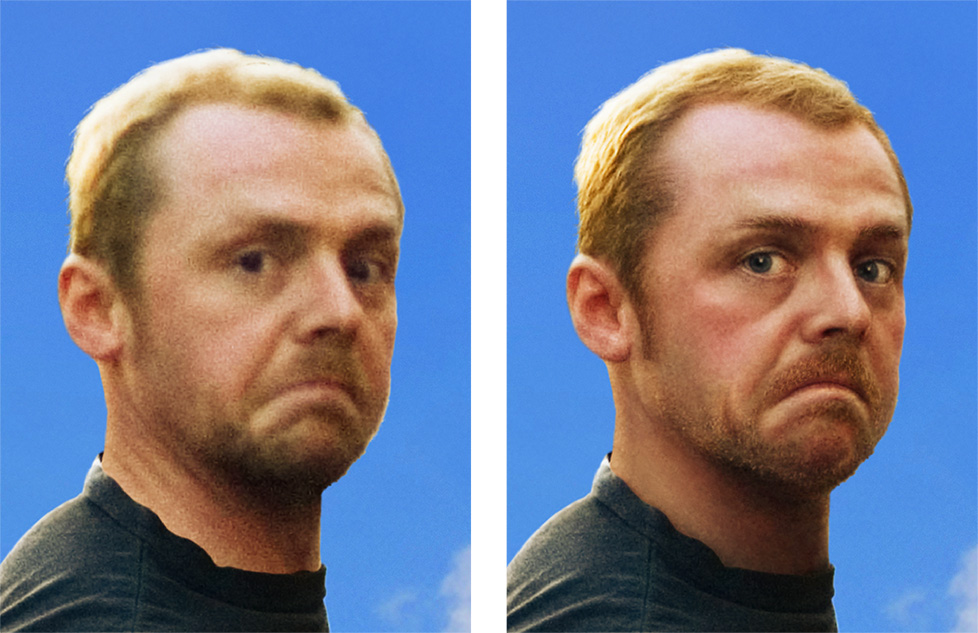
As I have posted before, in my day job I am a finisher. This means I am given a poster design called a comp (usually done in photoshop). My job is to upscale this comp to the proper resolution, repopulate all the photos with higher resolution images, and finally make all the photos blend well together. Depending on how well the comp has been built my job can be anything from mind-numbingly routine, to extremely difficult.

The difficult ones I always complain about, even though they provide the most creative freedom. There’s something deeply satisfying about turning a really soft, low resolution image into something sharp and high res, but the process is a lot of work, and causes a lot of stress. Sometimes you are literally painting a face into existence from a few stray pixels. The most difficult parts (the eyes and mouths, because they are the parts that the human eye looks at first) are very demanding. Even the most subtlest of changes can affect the entire piece.

Treatment for the movie Run Fat Boy Run done ~2008
Sometimes you are literally painting a face into existence from a few stray pixels

But it’s the easy parts that give me the most grief. The simpler the job (simple meaning less work for me) then the less vested I will be in the final art. Basically, I find it hard to care if I’m not fully engaged. And when I am less engaged I make more mistakes. In very simple terms you could say:

Boredom = Mistakes

At the end of my post on Failure I mentioned that the professionals I respect the most in my field go to great lengths to reduce the chances of making mistakes. This is why. Easy work leads to dumb mistakes.

This is true in every art form. Almost every author will tell you that when the story is really flowing that writing is a joy, but ask that same author what they think about facing copy edits for days on end and you will get a different reply. I know photographers who will jump at the chance to set up their lighting until everything is just right, but then struggle by the 100th shot at keeping the subject in focus.

This isn’t a problem with the creative process, it is a problem with the human brain. Our minds crave novelty, and seek out complexity. If your brain cannot have these things it will start to tune out. And no, it’s not an ADHD thing. It’s a flaw in how our brains are wired. Everyone’s brain does this, not just us skittish and sensitive creative types.

And this is why I say you need to make mistakes. Not to have yet another thing to clean up in your project, but to keep yourself just interested enough that you maintain your focus. You need to make little (and known) mistakes to keep from making large (and unknown) mistakes.

See? Simple. 😉

Here’s where it gets complicated. Only you can tell when your attention is starting to drift, so only you can tell when it’s time to start making mistakes. You have to sense your mood, and keep careful tabs on your mental state. This is by far the hardest part in the process. You have to know yourself well enough to know when things are going wrong. Once you can do that, the rest is easy.

Some examples:
I am blessed because photoshop is such an incredibly flexible app. There are almost an infinite number of ways to fix something. With the exception of resolution and color spaces, almost any solution is a functional one. True, there are some techniques which are better than others, but for the most part you can be creative in the way you fix things. And this part is key. You can intentionally switch things up.

Do you color correct using Curves and Hue/Sat? Try using Levels and Color Balance. Do you draw hair from outside to in? Try going inside to out.

If you’re a musician, try playing a song in a different key or tempo. Play that hard rock song like the deepest of country tunes, and see what that does for you. Switch to a minor key, play it like a polka. Do what it takes to make it new.

If you’re a painter, try painting with a different technique or color. If you’re a writer, try writing in a different voice or style, or have your character do something they would NEVER do.

The point is not what technique you use, it’s what happens to your brain while you’re doing them. Using a normally unused technique will change how you think. I will automatically make your brain focus more, making you more engaged.

Just making the attempt is the important part. It doesn’t even have to be useful. I often try two or three different techniques until I find one that works. The ones that don’t work I throw out. The goal is not just a final technique, but an engaged brain. Don’t be afraid to try and fail two or three times or more. You’re mining engagement here, and sometimes you have to prime the pump to get your brain flowing again.

The trick is to keep your attempts small and constrained. Don’t spend a lot of time thinking about it. Just do it and see what it does. Every mistake should be easy to repair, though I think you’ll be surprised at how many you eventually keep. You don’t want to do something that can spike your project, just something that can nudge your brain into a more focused state.

Besides having less mistakes in your final work, this technique also helps by giving you a more flexible approach to your craft. It is very easy to get all caught up into doing the same process over and over. Sometimes only one procedure will do the job properly, it’s just not always the best thing for your brain.

Basically, you are already creative in your craft, so why not be creative about your techniques as well? Use your creativity to make things better for you, and cause less mistakes.

I think that’s it for this week. Next week I have a technique to make your creative projects more fun.

On failure

More unsolicited advice on how to make it in the creative world, from someone who has been in the trenches for a while.

Years ago, back when I was single, I was hanging out at a coffee shop with Clark Souter who is a close friend. We got to talking with a young lady who wanted to break into jazz as a harpist. Clark is an amazing musician, and I’ve dabbled at it once or twice, so we had a lively conversation. At some point the topic turned to failure, and at that moment Clark and I started listing our failures. We didn’t just go half-way either. We went hard and deep, as young men are apt to do. Proud to show off our scars as it were. Mind you, Clark and I go way back, so we knew from what we were talking. And we didn’t pull any punches.

What I remember most while he and I cheerfully listed all the big mistakes we’d made, back and forth, laughing the whole time, was this poor young lady’s jaw getting lower and lower. Let me tell you, that poor woman was shocked. I guess she wasn’t used to creative types speaking like that.

In Los Angeles, you get used to others being supportive of you. One of the things I love about this town is if I tell my friends something ridiculous like I want to be an underwater rodeo clown, they’ll reply, “That sounds cool.” And then almost immediately follow it up with something like, “And you know, I bet you’d be good at it too.” Encouragement is common down here, and expected. Sure, I’ve met some artists who aren’t like that, but they’re the exception not the rule. Back in the small town where Clark and I grew up, you’d get a different reaction to that kind of statement. People would say, “You can’t have an underwater rodeo.” Or ask, “Why do you wanna do that?” Or say, “What’s wrong with driving a truck?” Basically, they’ll give every kind of passive-aggressive negative response you can think of. In a small town, the crime of dreaming big dreams is punished because you are rocking the boat. If you succeed it’s seen as a black mark on them. Whereas in a big city big dreams are expected. After all, everyone else came here to make it too, so there’s kind of an appreciation of the struggle. Hop on board. We’re all trying to make it here.

But what Clark and I were doing that day was more than blind support. We were being honest about the process. If you are used to someone weaponizing your mistakes against you, which is far too common in this world (believe me, I have those stories too), then listing all your failures out loud in public sounds suicidal, like you are giving ammunition to your enemies. The thing to remember among friends who are genuinely supportive, is that failure is not a weapon. It’s a tool for improvement. Failure is how we learn. It’s how we get better. It’s how we become professional.

A while back I wrote a post on making it as a creative called So You Want to be an Artist. In response to it, a cousin from back home sent me a link in FaceBook about creativity. The link was to a video that featured excerpts from a Ted Talk by Sir Ken Robinson called Do Schools Kill Creativity?

The talk starts off about children being willing to be wrong at things, much more than adults. Then he gives this great quote,

If you’re not prepared to be wrong, you’ll never come up with anything original.

I endorse this part of the video whole-heartedly. I suspect this is why my cousin sent it to me. Failure is not an option in the creative process. It’s a requirement. Often failure is the key to success. Sometimes you have to fail every other possible way before you can succeed. It sucks, I know, but it happens.

Unfortunately, the whole rest of the video is a mess. It goes on to suggest that because adults no longer make mistakes like kids, then obviously we’re teaching kids to be afraid of mistakes. Schools are bad, blah, blah, blah. He even says, “We are educating people out of their creative capacities.” To which I want to respond, “200 years ago, when most people were not educated, did we have a significantly more creative population?” When the obvious answer, “No,” is given, I would follow with, “My brother in Christ, doesn’t that indicate the world does this to us anyway?”

But enough of that crap. Let’s talk about mistakes for a minute. The kinds you want to make, and the kinds you don’t. And yes, I’m going to Not All Mistakes here, because it really is important what kind of mistakes you make. There are wrong ones and right ones. So let’s get to it.

Don’t aim for failure. Aim for success. Failure will naturally come on its own.
My first point would be to not try to make mistakes to begin with. The goal is to try to be the best you can be at your creative task. Just do that and it is guaranteed you will screw up. Trust me on this. Your work can be too rigid, or too earnest; too boring, or too over-the-top. It doesn’t really matter. You will find a way to screw it up somehow. We all do. After all, you’re attempting to get better, and getting better often means first being worse. No one starts at number 1. We all start at the bottom, and work our way up. Succeeding means trying, sometimes over and over, until the right combination of things “click”. By definition, all those previous attempts were failures, they just happened to be failures that pointed you to success.

Don’t make the same mistake twice.
The second point I would make is to try and not make the same mistake twice. Failure is a learning tool. This is its most valuable feature, so learn from it when it comes. “What did I do wrong?” “How can I improve?” These are the questions you should be asking yourself over and over. Again, yes the process sucks, but it’s better than quitting. This is how every pro you will ever meet in any creative field got there. They mistaked their asses off until they got better. You can too.

Keep your mistakes to yourself, and your art.
The third point (and perhaps the most important) is you want to keep your mistakes within your art of choice, and not in your life. It’s okay to be creative in your photography, but not with the money you need to pay the rent. It’s perfectly valid to drop an F bomb in your novel, but not in the emails you send for your day job. It’s one thing to experiment in the kitchen for your own dinner, but another thing entirely when the meal is also for your roommate. Go ahead and eat your mistakes, every good chef does, but don’t expect others to have to partake as well. You 100% don’t get to make your mistakes in the lives of others. This is called being an asshole. Being an artist is no excuse for shitty behavior. After all, they are not the one trying to make it, you are.

Own your mistakes, out loud.
And finally my last point, be honest and open with everyone when you fuck up. This is especially important when you are involved in a group art form like playing in a band, or making movie posters. When others are relying upon you to complete a creative task, pretending you didn’t make a mistake doesn’t make things better, it just makes things worse. And yes, it absolutely sucks when everyone is waiting on you and you keep screwing up.

I remember one time years ago, we were working on a bunch of outdoor pieces (billboards, movie posters, bus shelters, bus sides, etc) for a TV network. They were releasing a bunch of TV shows for a new season, and wanted all the advertising for each show to be unique and yet have a similar design theme so they were “of a piece.” All of them were going up in New York, featured in one place (for a convention I think), and all of it was under an insanely tight deadline. And in the middle of this insane week I was having a problem.

Occasionally we have to illustrate hair on people. Not the whole mass of hair, just the edges, so they look natural. This is part of cutting one head from one photo and adding to another body in another photo. The process is called photo-compositing, and finishers like myself do it in our day jobs all the time. To make it look right you often draw a lot of little hairs that fly away from the main hair mass. The problem I was having is that my hair edges didn’t look right. They looked wrong, drawn in. If done right, you cannot tell that they are not part of the original photo. If done wrong they look like someone let child paint them in photoshop. And that day, at that time, I could not do them. My hair looked like shit. Everything else I could do, but not hair. To this day I don’t know if I just lost my nerve, was especially stupid that week, or what. Normally I could do hair, but in that time and place I could not.

Fortunately I was just a freelancer. The agency had a Lead Finisher on staff, a wonderfully talented man by the name of Marco Blanco. After about the fifth time an art director told me the hair I was doing wasn’t cutting it, I had to go to Marco and tell him I can’t do the hair on this project. Let me tell you, that was super embarrassing. As a professional Finisher I prided myself on doing good work, only in this case I could not. Plus there was a huge financial risk. The client could have dropped me from the project or even from that agency. I only make money when someone calls me, and the VERY LAST THING I needed right then was a hit to my reputation.

Marco was not happy, but he was (and is) a pro of the highest caliber. We worked out a system where I did the majority of the work and then gave the file to him to finish the hair. It was embarrassing, but the work went out on time, and everyone got paid. And I have never had that problem since. I’ve had people ask me to change some of the hair I draw in. Sometimes I’ve had to entirely rethink how to do the hair for a piece, but I’ve never failed like that since.

One final point.
When you pursue a craft for many years, there comes a point where you make less and less mistakes. This is not an outcome (like sir Ken would like you to believe) of an education system or your job. It’s a natural extension of my second point, not making the same mistakes twice. If you try not to make mistakes twice, then after a while you stop making them. You’ve basically run out of mistakes to make. Oh, you will still make them, we’re all human, but they become so few and far between that they are almost like finding a lost jewel. Oh goody, I get to learn something new today.

In fact, the professionals I respect the most in my field go to great lengths to develop ways to reduce the chances of mistakes coming from anyone. They essentially engineer an art workflow that makes mistakes really hard to do, and when they do come up, really easy to fix. Far from showing a lack of creativity, this shows they are a master of their craft, and have a professional’s understanding of the cost of mistakes. Mistakes are allowed to happen, they just can only happen in small areas, and at little cost.

And in a professional environment, this is the highest one can get in a creative field. You keep your mistakes to righty controlled areas of exploration, always keeping a weather eye on the cost.

That’s enough for today. Next time I’ll talk about how I use mistakes in my everyday work.

First sale

I am very proud that my first professional sale to Baubles from Bones is up today.

C’mon Boys
The Unofficial History of United Hull Scrapers Interplanetary Local 479


As it says on the tin: A bored robot discovers labor rights in a town humming with radiation. 

I put a lot of charm into this one. Give it a read. See if it doesn’t make you smile.

If the universe has been kind to your wallet, please consider passing some of that along to Elyse and Joel, and the others. This magazine is a passion project for them, and it shows.